%20scale(0.100000,-0.100000)'%20fill='%23391064'%20stroke='none'%3e%3cpath%20d='M1399%203285%20c-883%20-121%20-1503%20-941%20-1384%20-1830%208%20-60%2015%20-111%2015%20-112%200%20-2%2083%20-3%20184%20-3%20l184%200%204%20198%20c4%20169%208%20204%2026%20250%2096%20245%20413%20286%20567%2074%2064%20-88%2065%20-102%2065%20-668%200%20-480%201%20-511%2019%20-540%2039%20-63%20132%20-69%20175%20-11%2021%2028%2021%2032%2026%201075%20l5%201047%2028%2056%20c100%20204%20354%20249%20519%2092%2033%20-32%2066%20-75%2080%20-106%20l23%20-52%203%20-815%20c1%20-448%205%20-825%207%20-838%2011%20-47%20106%20-78%20156%20-52%2049%2027%2049%2026%2049%20677%200%20341%204%20634%2010%20667%2044%20269%20352%20378%20546%20194%2094%20-89%2099%20-108%20102%20-430%20l3%20-278%20215%200%20214%200%20-4%2023%20c-3%2012%20-13%2060%20-22%20107%20-160%20823%20-968%201390%20-1815%201275z%20M1538%202761%20l-33%20-29%20-5%20-1044%20-5%20-1043%20-23%20-57%20c-108%20-267%20-477%20-272%20-601%20-8%20l-26%2055%20-5%20543%20-5%20544%20-33%2029%20c-45%2040%20-99%2040%20-144%200%20l-33%20-29%20-3%20-258%20c-4%20-269%20-9%20-301%20-50%20-323%20-9%20-5%20-120%20-12%20-245%20-16%20-265%20-8%20-244%2011%20-166%20-155%20214%20-452%20635%20-781%201135%20-886%20179%20-38%20459%20-40%20632%20-6%20733%20147%201264%20745%201318%201485%20l7%2097%20-287%200%20c-308%200%20-330%203%20-358%2053%20-9%2016%20-14%20113%20-18%20360%20l-5%20339%20-28%2024%20c-50%2043%20-137%2028%20-169%20-29%20-9%20-17%20-13%20-180%20-14%20-669%20-3%20-739%201%20-708%20-85%20-803%20-136%20-148%20-351%20-150%20-483%20-4%20-91%20101%20-86%2050%20-86%20960%200%20860%201%20846%20-51%20883%20-38%2026%20-93%2021%20-131%20-13z%20M10530%202753%20c-596%20-64%20-976%20-525%20-920%20-1117%2047%20-492%20378%20-822%20899%20-897%20117%20-16%20380%20-6%20492%2020%20386%2088%20659%20344%20756%20706%2038%20146%2039%20412%201%20555%20-136%20510%20-619%20798%20-1228%20733z%20m330%20-314%20c366%20-58%20584%20-318%20584%20-694%200%20-454%20-302%20-721%20-793%20-702%20-440%2017%20-702%20279%20-702%20702%200%20369%20202%20617%20561%20690%2080%2016%20263%2018%20350%204z%20M8507%202729%20c-378%20-40%20-637%20-271%20-637%20-568%200%20-326%20229%20-513%20735%20-601%20345%20-60%20506%20-159%20505%20-311%20-2%20-271%20-522%20-385%20-858%20-187%20-31%2018%20-107%2083%20-169%20144%20l-112%20112%20-98%20-120%20c-54%20-66%20-99%20-123%20-101%20-127%20-5%20-16%20160%20-171%20235%20-220%20143%20-94%20290%20-142%20493%20-161%20480%20-44%20855%20158%20920%20497%2070%20359%20-149%20564%20-721%20673%20-376%2073%20-509%20157%20-509%20323%200%20162%20174%20271%20435%20271%20230%200%20393%20-79%20533%20-258%20l23%20-30%2075%2075%20c42%2041%2089%2091%20106%20112%20l30%2037%20-42%2056%20c-121%20156%20-337%20259%20-591%20283%20-126%2012%20-139%2012%20-252%200z%20M4250%201710%20l0%20-1000%20155%200%20155%200%200%20375%200%20375%20271%20-2%20271%20-3%20237%20-370%20236%20-370%20194%20-3%20c156%20-2%20192%200%20184%2010%20-12%2014%20-444%20680%20-481%20740%20l-23%2037%2073%2038%20c109%2056%20224%20174%20276%20284%20181%20376%20-51%20811%20-469%20878%20-38%207%20-268%2011%20-571%2011%20l-508%200%200%20-1000z%20m1075%20671%20c271%20-109%20287%20-465%2027%20-593%20l-67%20-33%20-362%20-3%20-363%20-3%200%20331%200%20331%20353%20-3%20c345%20-3%20353%20-4%20412%20-27z%20M6230%201710%20l0%20-1000%20710%200%20710%200%200%20150%200%20150%20-555%200%20-555%200%202%20288%203%20287%20473%203%20472%202%200%20145%200%20145%20-472%202%20-473%203%20-3%20263%20-2%20262%20555%200%20555%200%200%20150%200%20150%20-710%200%20-710%200%200%20-1000z%20M12020%201710%20l0%20-1000%20150%200%20150%200%200%20498%20c0%20273%20-5%20549%20-10%20612%20-30%20325%20-38%20425%20-36%20427%201%202%20301%20-344%20667%20-767%20l664%20-770%20148%200%20147%200%200%201000%200%201000%20-155%200%20-155%200%200%20-447%20c0%20-447%2010%20-762%2030%20-987%206%20-65%209%20-120%207%20-123%20-3%20-2%20-301%20347%20-663%20776%20l-659%20781%20-142%200%20-143%200%200%20-1000z%20M14930%202690%20c-20%20-37%20-840%20-1962%20-840%20-1971%200%20-6%2066%20-8%20156%20-7%20l157%203%20103%20240%20103%20240%20483%200%20483%200%20104%20-242%20105%20-243%20164%200%20164%200%20-6%2023%20c-3%2012%20-192%20461%20-419%20997%20l-414%20975%20-166%203%20c-159%202%20-167%202%20-177%20-18z%20m235%20-505%20c36%20-98%20113%20-290%20171%20-425%2057%20-135%20104%20-251%20104%20-258%200%20-9%20-83%20-12%20-350%20-12%20-192%200%20-350%203%20-350%206%200%203%2045%20111%20101%20241%2096%20224%20212%20514%20239%20596%206%2021%2014%2037%2016%2035%201%20-2%2033%20-84%2069%20-183z%20M16300%201710%20l0%20-1000%20156%200%20155%200%20-4%20548%20c-3%20472%20-7%20577%20-26%20766%20-12%20120%20-20%20220%20-19%20222%202%201%20302%20-344%20668%20-767%20l664%20-769%20148%200%20148%200%200%201000%200%201000%20-156%200%20-156%200%205%20-612%20c4%20-440%2010%20-661%2021%20-782%209%20-93%2015%20-170%2013%20-171%20-1%20-2%20-299%20350%20-662%20781%20l-660%20783%20-147%200%20-148%201%200%20-1000z%20M18400%202560%20l0%20-150%20320%200%20320%200%200%20-850%200%20-850%20150%200%20150%200%200%20850%200%20850%20330%200%20330%200%200%20150%200%20150%20-800%200%20-800%200%200%20-150z'/%3e%3c/g%3e%3c/svg%3e)

Contents
The strategy hiding in plain sight
When Resonant's State of BD research revealed that 76% of recruitment firms have no clearly defined sales plan, it confirmed what I have seen across hundreds of conversations with recruitment leaders over nearly twenty years. The full findings, including the methodology behind that figure, are in the State of BD Report 2025.
But here is the uncomfortable truth: every recruitment business already has a commercial strategy. They just haven't chosen it consciously.
Strategy isn't something you have or don't have. It is the sum of decisions you make about how you create and capture value. Whether you have made those decisions deliberately or by default, you have made them. The question is whether they are working for you or against you.
The seven decisions you have already made
Commercial strategy in recruitment comes down to seven core decisions. Most firms have let these decisions make themselves, shaped by what is comfortable, what is familiar, or what happened to work once. When we run commercial reviews with recruitment businesses, we surface what has actually been decided, then test whether those decisions serve the business they are trying to build.
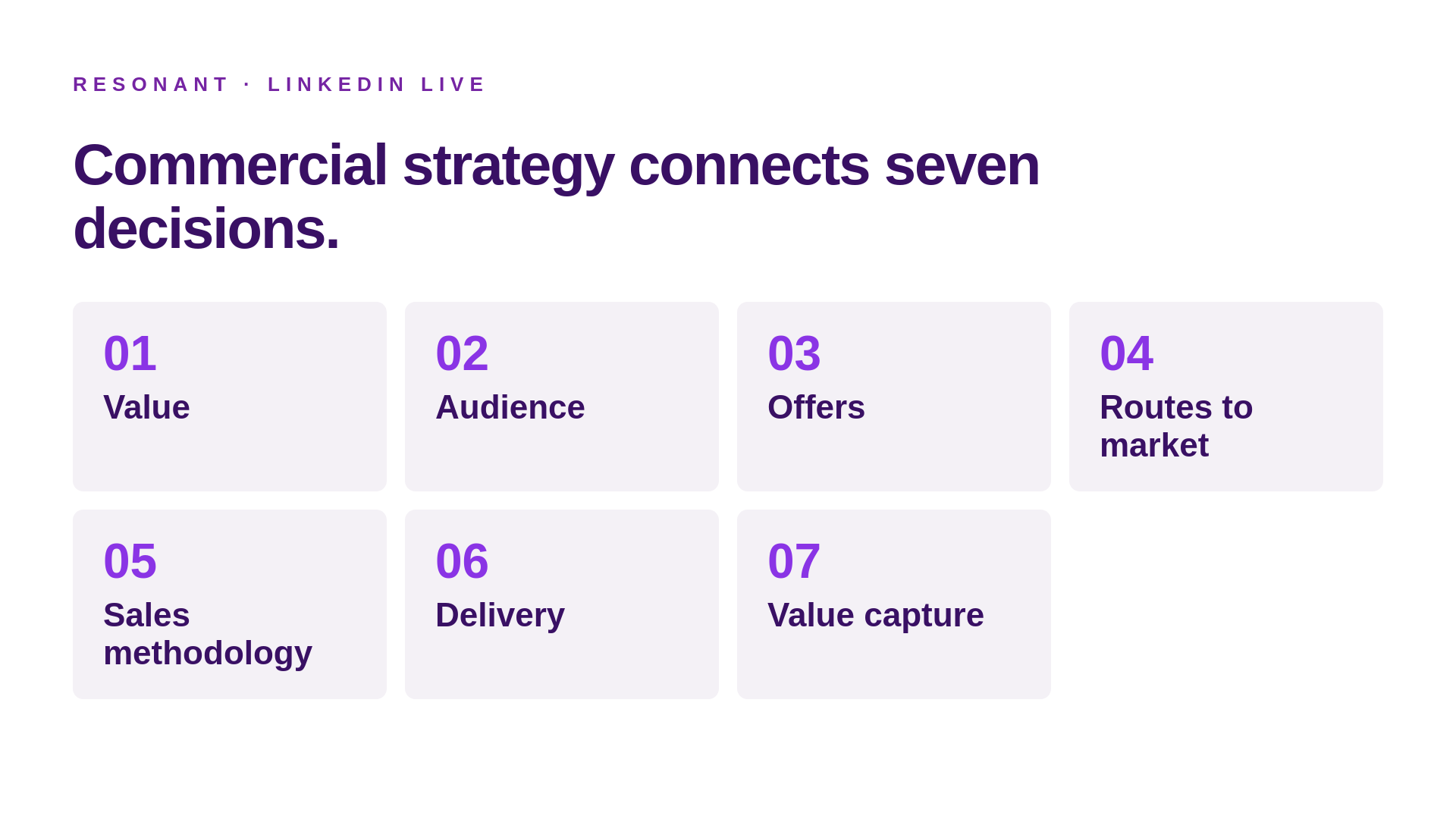
1. Value
If you don't decide what is valuable about your service, the market will decide for you. And the market will decide that your value is your price, your speed and your ability to transact. Your value becomes commoditised by default.
That is a legitimate choice; it is the game EasyJet and Lidl play, and they win at it. But if you have ambitions to be a premium brand and you haven't defined your value in a way clients understand, you get squeezed. Your positioning is a request: "see me as this." Unless you are clear about what you want to be seen as, clients will see you however suits them best.
2. Audience
Just like value, if you don't choose your audience, they choose you. Firms generating inbound often celebrate the volume without asking who it is from. Is it from ideal clients? From the types of businesses you recruit for well? Or is it spread across your sector, leaving you scrambling to build talent pools for every role that lands?
If you are working with clients who recruit once or twice a year with low fees and limited budget, that is a decision. The question is: what led to it? Often, the truth is there was no strategy. It just happened.
3. Offer
For most recruiters, the offer they make their clients is "we will fill the role." That is fine, unless you have defined your value as more than transactional. If your value lies in insight, data, market knowledge and commercial judgement, but your offer is just "here's a shortlist," that mismatch will sink you.
Another way to think of your offer is: what is the thing you most want to be known for? It is typically the most valuable component of your overall value, packaged into something that is uniquely yours. That might be giving companies a competitive advantage by helping them hire the best talent in a way few other firms can compete with.
4. Routes to market
Most firms default to reactive outbound because it is there and it seems to work. They will tell you MPCs or speccing candidates works best. But the real question is: what have you discounted?
There are five routes worth considering:
- Existing clients: increasing revenue from the relationships you already hold.
- Strategic proactive outbound: deliberate campaigns aimed at a defined audience and buying trigger.
- Reactive outbound: MPCs, spec calls and responding to what the market puts in front of you.
- Inbound marketing: content, reputation and demand that arrives without a call being made.
- Commercial allies: partners and suppliers around your market who reach your buyers first.
Most recruitment businesses haven't made conscious decisions about any of them. That piece has been inherited, not owned.
5. Sales methodology
Most recruitment firms don't have one. They let clients steer the conversation. They talk about rapport and relationships. What they are really saying is: "we'll let our clients decide how they want to buy from us."
If you let clients decide how they want to buy, they'll decide what they want to pay. It doesn't matter how good your value definition is, how tight your audience is, or how effectively you have gone to market. If you hand control of the sales process to the client, they will pay what suits them. The value and commitment you secure will never be better than the quality of your sales methodology.
How often do your fee negotiations end up with you securing more commitment or bigger fees than you typically expect?
6. Delivery
How do you deliver value? How is it packaged and structured? When do your delivery consultants get in front of clients? How do you describe them?
Whether you have structured this consciously or not, your clients are getting different levels of service. Without a decision about how you deliver, you lose profit and productivity. Some low-value clients get silver service. Some high-value clients get inconsistent delivery and don't come back. Being clear about how you deliver your value stops you losing good business and overserving smaller opportunities.
"Ben has caused us to think differently about every aspect of how we win and serve clients and, most importantly, why. That has stopped the rollercoaster, and earned the opportunity to work with clients who truly value what we do."
7. Product and pricing
If you don't take control of this, you end up with contingent terms, market-rate fees, and you miss out on recurring revenue opportunities. The strongest commercial strategies provide a product ecosystem that makes it easier to start new conversations, win business before clients are hiring, then deliver hiring through a relationship and increase revenue as you go.
Recruitment creates recurring value for businesses; it is not a one-off transaction. If your products don't capture recurring revenue, that is a decision. And if you are working with clients for whom recruitment has no recurring value, you might need to consider whether recurring revenue is possible for you. The answer is usually an adjustment in strategy, rather than walking away from more stable growth.
What it costs to leave these decisions on autopilot
When these seven decisions aren't made consciously, the commercial strategy becomes a patchwork of subconscious choices, possibly made by the wrong people at the wrong time with the wrong information. That is not a criticism. It is the reality for most firms.
The cost shows up as expert recruiters with long tenure competing on fees for work rookies can fill. Consulting fees, recurring revenue and retainers feel out of reach. Growth becomes fragile: good months depend on luck, a single relationship, or an exceptional individual. Plenty of motion, very little momentum.

Redefining your commercial strategy
You don't need to fix all seven decisions at once. You need to see what you have actually decided, whether those decisions are serving you, and which gap is costing you most.
Start by asking:
- Where does your firm create value that clients don't yet understand or pay for?
- Which audience and buying trigger should you be known for?
- What is the clearest offer and sales route for that audience?
- Where do your marketing, sales and delivery journeys break apart?
The aim isn't perfection. It is replacing autopilot with intention, one decision at a time.
If you want the longer explainer on how these decisions fit together as one system, read the complete guide to commercial strategy for recruitment firms.
The next step
Questions recruitment leaders ask
Most can describe what they do, but few have defined the business outcome they create beyond filling a vacancy. If you haven't articulated it clearly enough that clients understand and pay for it, the market will default to price and speed.
Absolutely. Transactional value is a legitimate position if you own it deliberately, like EasyJet or Lidl. The problem comes when you want to be premium but operate like a commodity.
If reactive outbound is your most effective channel, the question isn't whether it works. It's what else you've tried, what you've ruled out, and whether you're leaving revenue on the table by ignoring the other four routes to market.
Look for the gaps: where marketing attracts the wrong clients, where sales relies on founder heroics, where delivery doesn't match the promise, or where fees get negotiated down after the deal is won. Start there.
No. The decisions are already made, they're just implicit. Making them explicit, testing them and adjusting where needed is faster than you think. Most firms already have the raw material; it just needs structure.